
Climate (In)justice
Why can’t the environmental transition succeed
without working-class neighbourhoods?
Narratives and analyses from more than 1,000 young people on climate injustice in working-class neighbourhoods, Overseas Territories, and the Global South.

-
In this report, we argue that ecology must not remain a privilege reserved for a few, but should be recognized as a universal right. We, the residents of working-class neighbourhoods and overseas territories, need ecology. But this report also shows that ecology needs us—our experiences, our knowledge, and every voice, especially those from working-class neighbourhoods.
Ce travail a vocation à s’éloigner des travaux sociologiques mainstream sur les quartiers, car nous ne documentons pas pour les autres, mais d’abord pour nous. Pour nous outiller, déconstruire nos barrières limitantes et nous organiser pour plus de justice, pour tous et prendre notre place dans ce combat.
-
You can get in touch with us to book a training session, explore a partnership opportunity (research collaboration, event, communications project, and more), or follow us on social media to stay informed about upcoming events and activities related to the publication.
-
We mobilised a wide range of researchers and experts from diverse backgrounds, including geographers, artists, community organisers, and policymakers. Among those who agreed to be publicly acknowledged are Yamina Saheb, Renda Belmallem, Mickael Chellal, Olivier Marboeuf, Marwan Mohammed, Karim Taharount, and Wiam Berhouma, among others.
-
On prévoit de poursuivre nos ateliers sur l’injustice climatique pour les jeunes, mais aussi ceux à destination des institutions et de l’écosystème climat. L’idée, c’est aussi de faire de la mise en commun à travers la France et l’Europe en poursuivant la diffusion du rapport. Enfin, des actions sur le terrain arrivent prochainement. Restez branchés !
What is climate injustice ? Why did we choose this name ?
We developed the concept of climate injustice to highlight the systemic and discriminatory nature of environmental impacts.
Unlike a generalized view of climate change, our concept seeks to uncover the dynamics of exclusion and historical inequalities—stemming from colonialism, capitalism, and environmental racism—that result in working-class neighbourhoods and overseas territories bearing the burden of climate change and environmental racism without having access to the resources needed to cope with them.
By naming this reality climate injustice, Ghett’up emphasizes the political and social dimensions of the crisis while advocating for a transformed and transformative society, with diverse lived realities placed at its centre.

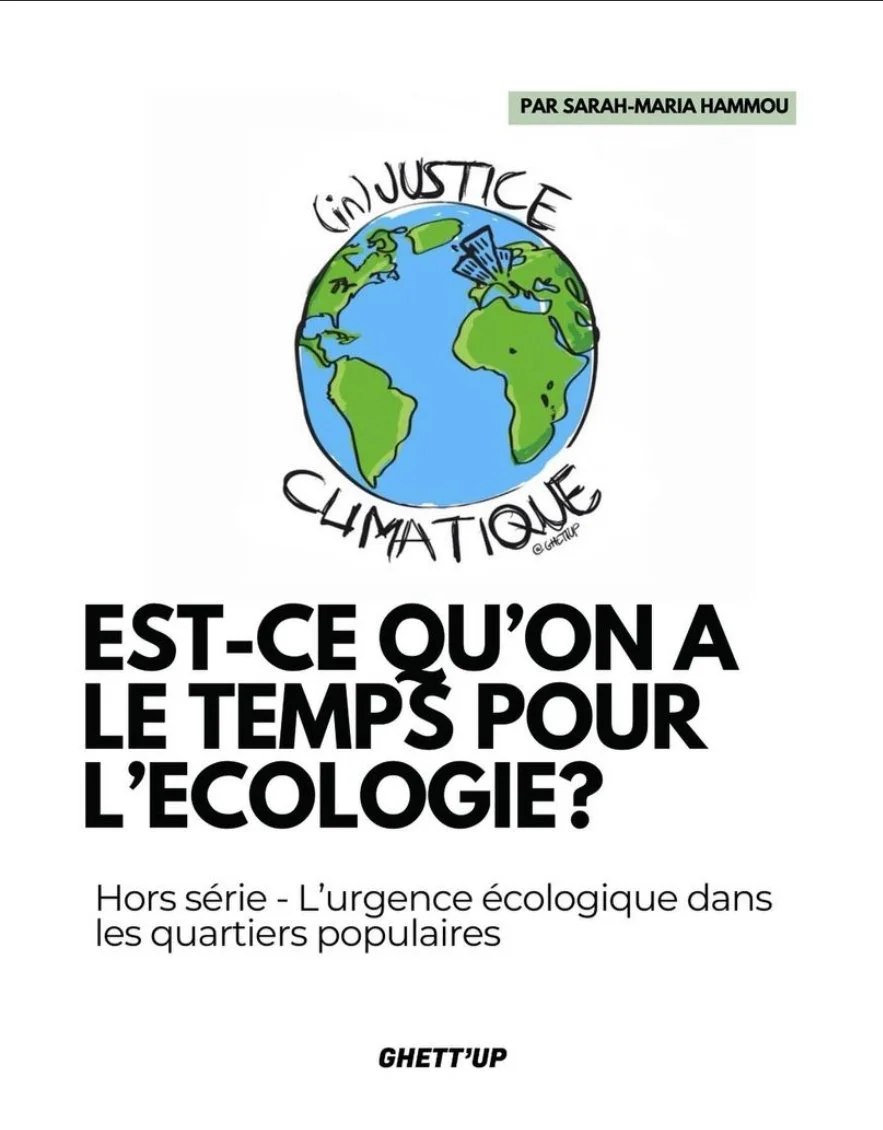
If you want to download the report, it’s right here 👇 !
Discover the powerful stories of more than 1,000 young people from
Climate injustice, seen from the real front line.
Our online posts
-
![]()
Do we have time for ecology?
-
![]()
“My unhealthy housing has an impact on my physical and mental health”
-
![]()
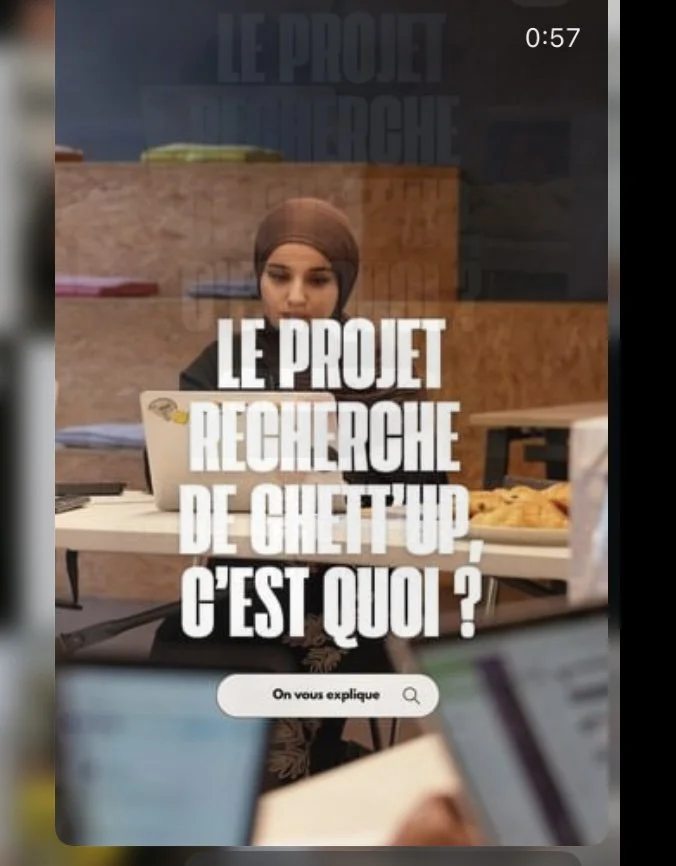
What is the Ghett'up research project? We explain it
-
![]()
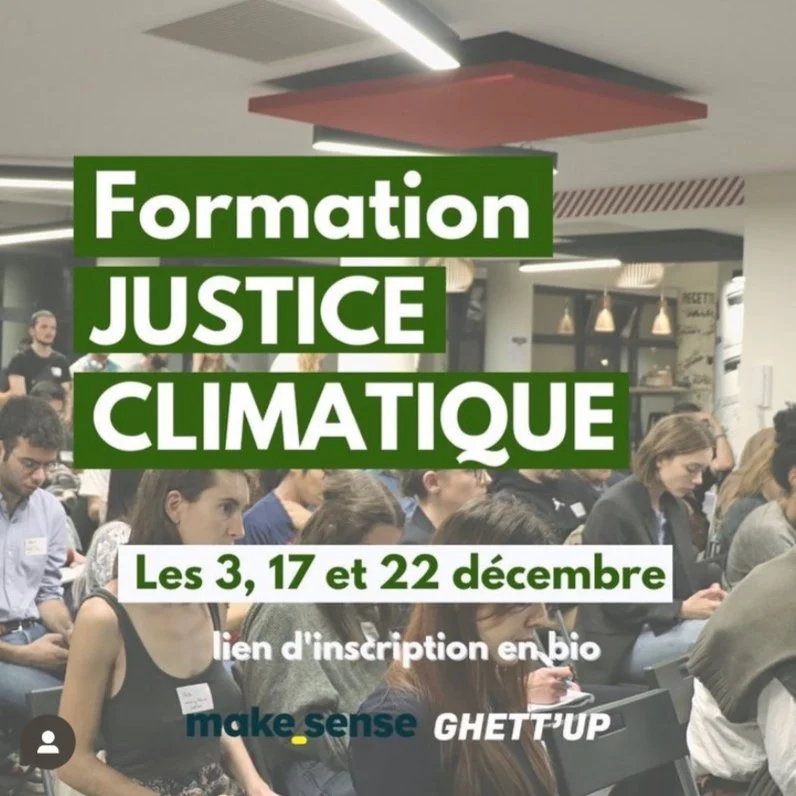
Climate justice training in collaboration with makesense
-
![]()
Malika and Michelle testify: living in a strainer or a thermal kettle is living in permanent discomfort that can be dangerous to health.
-
![]()
With Oxfam, we present you 6 figures to understand thermal strainers and kettles to alert to the situation and ask the government to keep its promises.
-
![]()
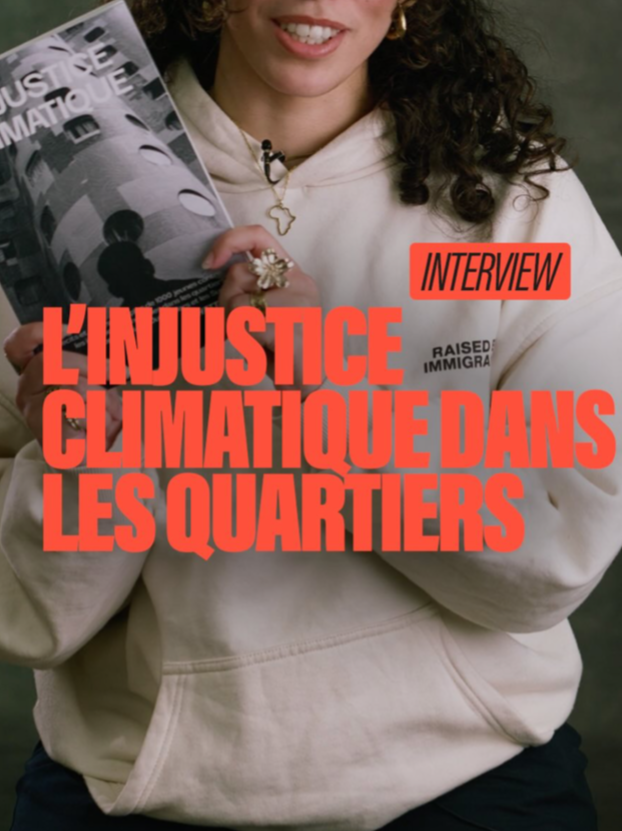
Rania Daki explains to Booska P's microphone why we are much more concerned than we think about climate change.
-
![]()
Here are 23 accounts to follow that fight for climate justice in popular neighborhoods and overseas.
-
![]()
From the towers of Seine-Saint-Denis to the deforested fields of Haiti, the same injustices persist. It is no coincidence, it is a system that continues to scarify our lives and our lands for the benefit of others.





For press requests, book a workshop, or just a chat :)
